
Concrete Repair vs. Replacement: How Utah Owners Can Decide
When repairing damaged concrete makes sense, when replacement is the better investment, and the information owners need before choosing.
Parking structures
Rust stains, leaks, hollow concrete and failed joints are early warnings. What each sign means for a Utah parking structure and what to do next.
Parking structures in Utah deal with an unusually harsh combination: snow and deicing salt tracked in by every vehicle, dozens of freeze-thaw cycles each winter and constant traffic. The damage builds slowly inside the concrete, then shows up all at once. These seven signs tell you it is time to act — and the earlier you act, the less the repair costs.
See it in section
01 / 06
Snowmelt carries deicing salt into the slab. Chlorides build up around the reinforcing steel year after year.
02 / 06
Once enough chlorides reach the bar, the protective layer on the steel breaks down and corrosion begins.
03 / 06
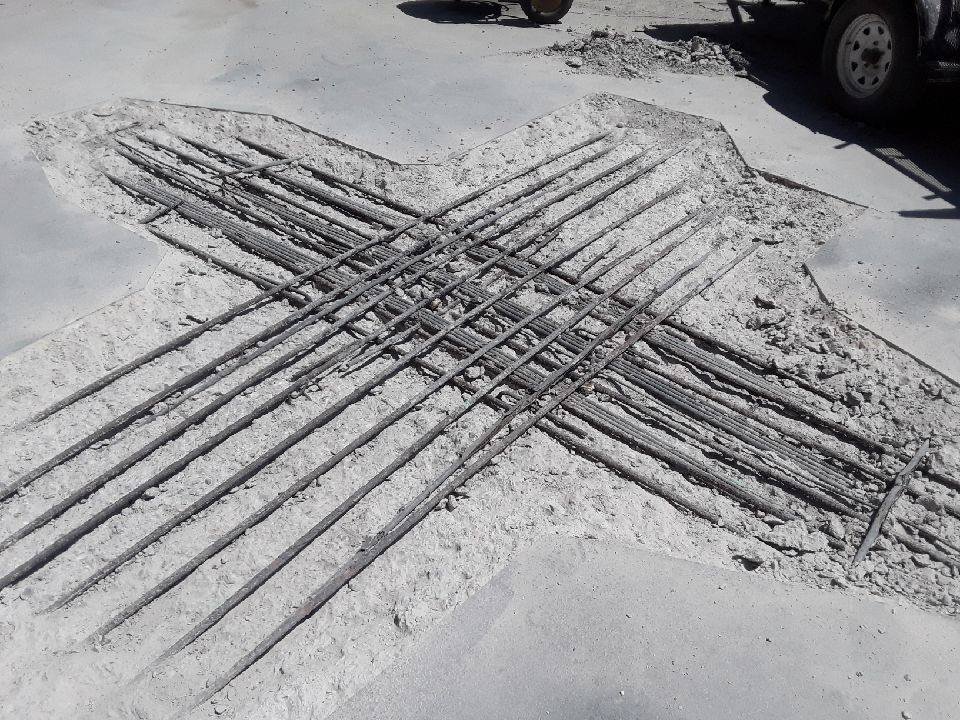
Rust takes up several times the volume of the steel. It pushes on the concrete and opens a crack along the bars.
04 / 06
Tap the deck with a hammer and a delaminated area sounds hollow, often before anything shows on the surface.
05 / 06
The cracked cover concrete breaks loose, leaving a pothole with exposed, rusted steel.
06 / 06
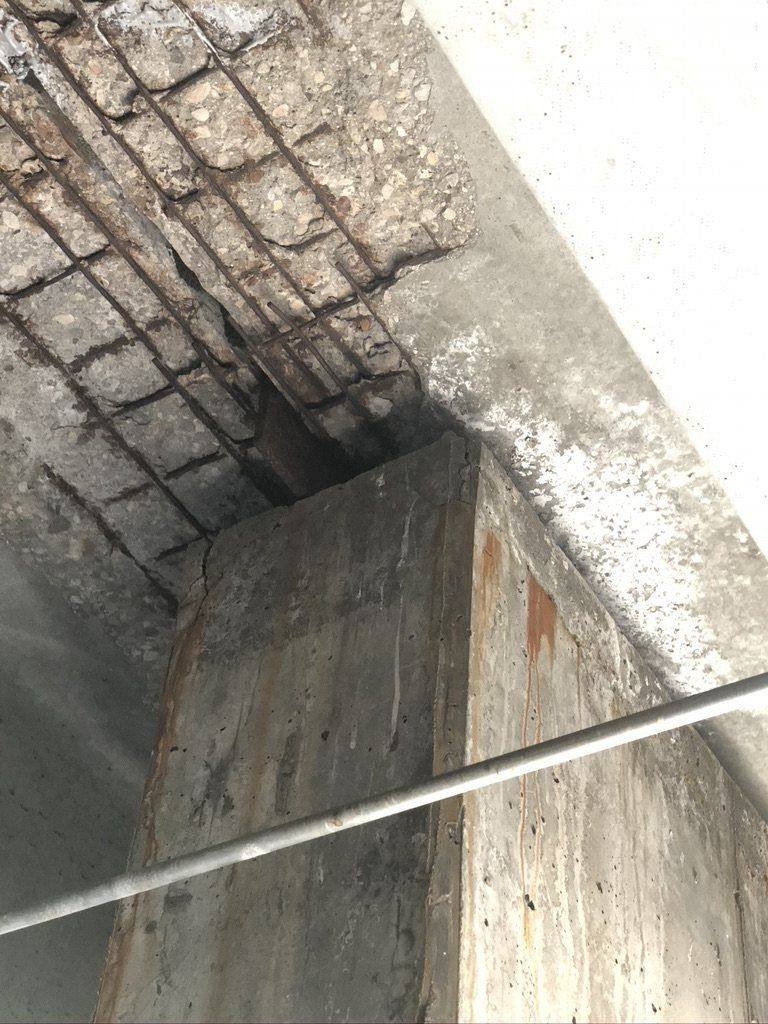
Water and rust come through the cracks and stain the ceiling, beams and columns on the level below.
Orange-brown staining means the reinforcing steel inside the concrete is corroding. Water carrying the corrosion products is leaking through cracks and leaving rust behind. By the time stains appear, corrosion is active.
White, crusty deposits on the underside of the deck mean water is moving through the concrete and carrying dissolved minerals with it. Where water is moving, chlorides from deicing salts are moving too.
Leaks through the deck usually come from cracks, failed expansion joints, failed sealant at construction joints or worn-out traffic coating. Every leak is a path for salt water into the structure.
A spall is a piece of concrete that has broken away, often exposing the steel underneath. It is caused by corroding steel expanding and pushing the concrete off. Overhead spalls are also a safety hazard: loose concrete can fall.
When you drag a chain or tap the deck with a hammer and hear a hollow sound, the concrete has delaminated — it has separated into layers above the corroding steel, even though nothing is visible yet. Delamination is usually far more extensive than the visible spalls.
Torn, missing or loose joint seals, broken concrete along the joint edges, and staining below the joint all mean the joint is letting water and salts straight into the structure.
Bare concrete showing through in drive aisles, ramps and turning lanes means the protective membrane is gone in exactly the places that see the most salt and traffic.
DD Reconstruction provides parking structure repair, including expansion joint replacement, and traffic coatings across Utah, phased so your garage stays open. Request a site assessment.
Walk it at least once a year after winter, and have a professional condition assessment every few years or whenever spalls, rust stains or leaks appear.
It can be. Loose concrete overhead can fall on people and vehicles. Loose pieces should be removed promptly and the area assessed.
Yes. Repairs are typically phased by level or bay with traffic control, so most of the structure remains in service.
Questions about a project? Call (801) 599-4845 or email bids@ddreconstruction.com.
Send drawings, specs or a few photos. Our estimating team replies within one business day.