
7 Signs Your Parking Structure Needs Repair
Rust stains, leaks, hollow concrete and failed joints are early warnings. What each sign means for a Utah parking structure and what to do next.
Concrete repair
When repairing damaged concrete makes sense, when replacement is the better investment, and the information owners need before choosing.
Cracked, spalled or rust-stained concrete raises a simple question with expensive consequences: repair it, or tear it out and replace it? For most structures in service, repair is the faster and far less expensive option — but not always. This guide explains how to make the call.
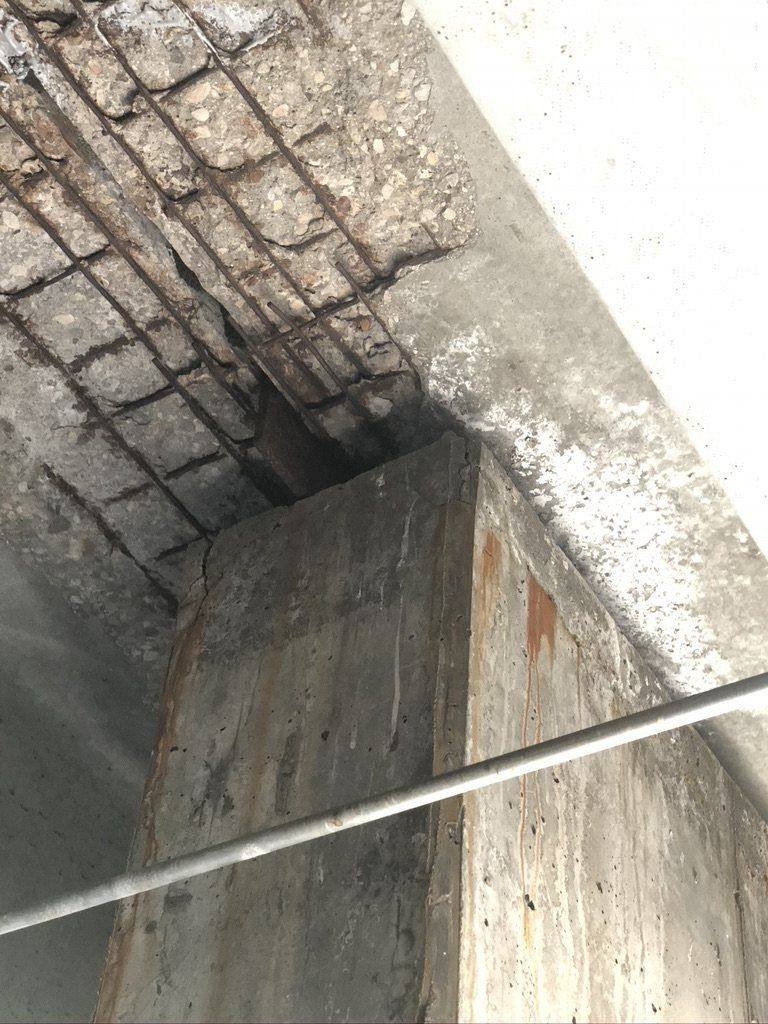
Concrete rarely fails on its own. In Utah, the most common cause of deterioration is water and chlorides reaching the reinforcing steel. Deicing salts, groundwater and leaking joints carry chlorides into the concrete. Once enough reach the steel, it corrodes, expands and cracks the concrete from the inside.
Other causes include freeze-thaw damage, carbonation, chemical attack in industrial and wastewater facilities, poor original construction (shallow cover over the steel, bad joints, inadequate curing) and overloading.
Whether you repair or replace, the cause has to be addressed. Otherwise the new concrete — or the repair — will deteriorate the same way.
Repair is usually the right choice when:
A durable repair removes all unsound concrete, cleans or replaces corroded reinforcing steel, rebuilds the section with a compatible material and then protects it with coatings, sealers or membranes.
Replacement starts to make sense when:
Often the answer is mixed: replace a few badly damaged elements and repair the rest.
See it in section
01 / 06
Sounding and a visual survey map the delamination you cannot see yet, so the scope matches the real damage.
02 / 06
A shallow saw cut squares the repair area, so the new material meets a clean edge instead of a thin feathered one.
03 / 06
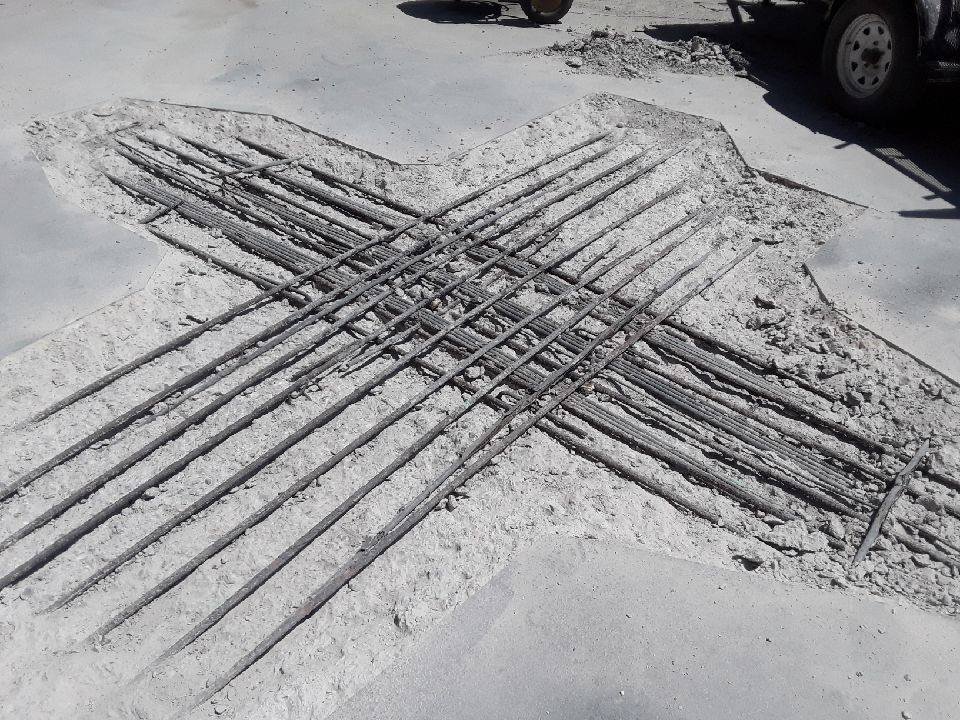
Unsound concrete is removed until sound concrete surrounds the corroded reinforcing steel.
04 / 06
Rust is removed from the bars, steel that has lost section is supplemented, and a protective coating is applied.
05 / 06
A repair mortar or concrete matched to the depth and exposure is placed, consolidated and cured.
06 / 06 GXS
A coating or sealer keeps water and salt out, so the cause of the damage is addressed and the repair lasts.
Repair is usually the better value for structures in service — as long as the repair addresses the cause and is protected afterward. Replacement is the right call when damage is widespread or the structure no longer meets requirements. In both cases, a condition assessment gives you the facts to decide.
DD Reconstruction provides condition surveys, repair budgets and concrete repair and restoration across Utah. Send us photos or request a site visit.
Usually, by a wide margin, and it keeps the structure in service. Replacement becomes competitive when deterioration is widespread or the structure no longer meets load or code requirements.
A condition assessment combines a visual survey with sounding to map delamination that is not visible yet, so the repair scope and budget reflect the real extent of damage.
Repairs can be finished to blend with existing surfaces, and coatings or sealers applied afterward create a uniform appearance.
Questions about a project? Call (801) 599-4845 or email bids@ddreconstruction.com.
Send drawings, specs or a few photos. Our estimating team replies within one business day.